



Vegetable Washer Machine
What is Vegetable Washer Machine
The Vegetable washing machine mimics manual cleaning by using mesh belts for transmission. The high-pressure air pump produces gas, which causes the veggies in the cleaning machine to whirl violently. The contaminants on the surface of the vegetables are successfully separated by the operation of high-pressure water flow and powerful bubbles. Simultaneously, because the material is spun in the steam-water combination, it successfully avoids material damage caused by bumps, knocks, and scratches during the cleaning process. Vegetables are washed in a vegetable washing machine. Washing vegetables is an important step in the processing process that results in appealing, chemical-free veggies. After harvesting, vegetables such as potatoes, tomatoes, cabbage, carrots, radishes, and others must be cleansed of dust particles before being moved to another location.
Benefits of Vegetable Washer Machine
Improves food safety
A vegetable washer machine ensures that vegetables are free from any harmful pesticides, bacteria, and dirt that could cause food poisoning or health issues. It helps to remove all the contaminants that naturally accumulate on the surface of veggies during growth, handling, and shipping.
Saves time and effort
Handwashing vegetables is a tedious task and requires a lot of time and effort. With an automatic vegetable washing machine, you can wash all your vegetables in less time and with less effort.
Energy and water efficient
The vegetable washing machine uses less water compared to traditional methods of washing, which conserves water and helps to save energy. The machine also reduces the overall consumption of water required for washing vegetables.
Cost-effective
The machine is cost-effective compared to traditional methods of washing vegetables. It saves money on labor costs and reduces water and energy expenses.
-
![Vegetable Roller Washer Machine]() Vegetable Roller Washer MachineVegetable washing machine can effectively degrade harmful pesticides and bacteria present on fruits and vegetables.read more
Vegetable Roller Washer MachineVegetable washing machine can effectively degrade harmful pesticides and bacteria present on fruits and vegetables.read more -
![Industrial Roller Washer Machine]() Industrial Roller Washer MachineIn homes, bubble washing machines are an essential item. They save time and energy, and they're a perfect fit for families with children who frequently require clean clothes.read more
Industrial Roller Washer MachineIn homes, bubble washing machines are an essential item. They save time and energy, and they're a perfect fit for families with children who frequently require clean clothes.read more -
![High Capacity Fruit and Vegetable Washer]() High Capacity Fruit and Vegetable WasherUsing this machine also eliminates harmful bacteria. In recent years, there have been numerous cases of foodborne illness caused by pathogens present in fruits and vegetables.read more
High Capacity Fruit and Vegetable WasherUsing this machine also eliminates harmful bacteria. In recent years, there have been numerous cases of foodborne illness caused by pathogens present in fruits and vegetables.read more -
![Stainless Steel Conveyorized Roller Washer]() Stainless Steel Conveyorized Roller WasherSometimes we get tired of washing fruits one by one, like grapes and blueberries. Our fruit cleaning device is a practical assistant that quickly and easily cleans fruits and vegetables in seconds.read more
Stainless Steel Conveyorized Roller WasherSometimes we get tired of washing fruits one by one, like grapes and blueberries. Our fruit cleaning device is a practical assistant that quickly and easily cleans fruits and vegetables in seconds.read more -
![Commercial Food Processing Washing Machine]() Commercial Food Processing Washing MachineVegetable washers use a unique process that removes unwanted chemicals and harmful bacteria without damaging the product.read more
Commercial Food Processing Washing MachineVegetable washers use a unique process that removes unwanted chemicals and harmful bacteria without damaging the product.read more -
![Automatic Roller Type Vegetable Washer]() Automatic Roller Type Vegetable WasherThe vegetable washing machine is a great invention that makes the process of cleaning vegetables easier and more convenient.read more
Automatic Roller Type Vegetable WasherThe vegetable washing machine is a great invention that makes the process of cleaning vegetables easier and more convenient.read more


Why Choose US
Our Factory
Our company established a R&D department, design department and engineering department. Each department is responsible for respective work. In addition to the research and development of new products, the R&D department also upgrades and adjusts machines, making them more efficient and easier to operate.
After-Sales Service
Contact our after-sales team for machine inquiries.We offer phone and remote technical support.
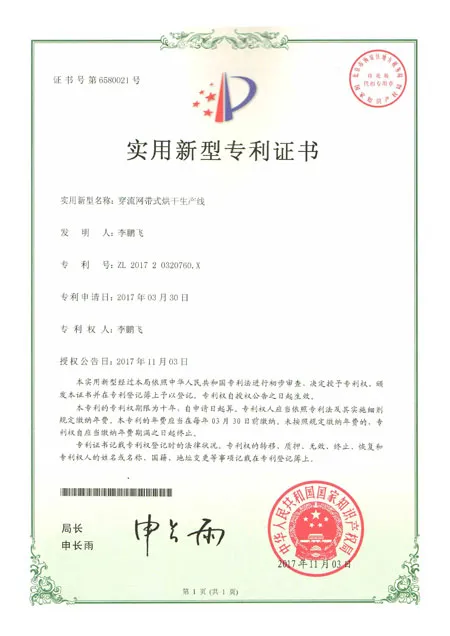
Our Certificate
Compliant with requirements and standards of CE and ISO certificates, our machines are well received among customers both at home and abroad. According to customers' feedbacks and practical experience, it's estimated that machine machines by Shanqiao realize at least 80% dehydration and deep process of raw materials.
Our Services
The engineering department is mainly in charge of the installation, adjustment and operation of machines. The department also provides worker training.
Types of Vegetable Washer Machine
High-pressure vegetable washer
This type of machine is designed to wash vegetables using high-pressure water jets that effectively clean and remove dirt from the surface of the vegetables.
Ultrasonic vegetable washer
This type of machine uses ultrasonic waves to clean and remove dirt and debris from the surface of the fruits and vegetables.

Rotary washing machine
This type of machine is designed to wash vegetables by rotating them in a large drum while spraying water and cleaning agents.
Vacuum vegetable washer
This type of machine uses a vacuum to remove dirt and debris from the surface of the vegetables while also washing them with water.
Principle of Vegetable Washing Machine
In Vegetable washing machines, the spray cleaning function is introduced to the material transfer process, allowing the material to be sprayed after the soda cleaning is done. The purpose of this method is to replace the unclean water on the material's surface and increase the material's cleaning effect. Simultaneously, after the secondary cleaning of the external spray water, which will automatically flow into the water tank to replace the cleaning tank in the supplementary tank, maintaining the cleanliness of the water quality in the tank, improving the cleaning utilization rate, and increasing the cleaning effect.
A specific gadget was also added to the leaf vegetable bubble washer, which allows the leaf vegetable to have greater contact with water and air. and the pushing mechanism is capable of propelling the light-leaf vegetable ahead at a consistent speed. Water is pumped by the circulating water pump to allow contaminants to enter the water circulation tank during the treatment of precipitated impurities. The water tank's filtration device can be dismantled at any time. The contaminants that have been filtered are left in the water tank. To keep the pool clean, floating items are discharged through the upper overflow port. The ability to remove contaminants in a timely fashion.
A vegetable washing machine is a device that is designed to clean fruits and vegetables thoroughly. It can remove dirt, dust, harmful bacteria, pesticides, and other contaminants that may be present on the surface of the produce. The machine comes in different sizes and capacities, and it can be used for cleaning a small number of fruits and vegetables at home or a large quantity of produce in a commercial setting.
A vegetable washing machine works by using water and different cleaning agents to remove contaminants from fruits and vegetables. The machine has a series of brushes and spray jets that ensure that every part of the produce is thoroughly cleaned. The cleaning agents used in the machine vary from machine to machine, but they are usually made of natural, food-grade ingredients that are safe for human consumption.Some vegetable washing machines come with different settings that allow users to adjust the water pressure, brush rotation speed, and cleaning agent concentration to suit different types of produce. For example, delicate fruits like berries may require a gentler cleaning process than hardier vegetables like carrots and potatoes.

How to Use Fruit and Vegetable Cleaning Machine Correctly
Prepare the machine
Before using the fruit and vegetable cleaning machine, make sure that it is clean and free of any debris. Check the power cord and plug to ensure they are in good condition.
Sort your produce
Sort your fruits and vegetables according to type and size. Hard-skinned fruits and vegetables might need a longer washing cycle than soft-skinned ones.
Rinse the produce
Give your produce a quick rinse under running water to remove any visible dirt or debris.
Load the machine
Place the sorted produce in the machine basket and ensure that the basket is not overloaded. Overloading the basket might affect the cleaning process.
Add water
Add enough water to cover all the produce in the machine basket. The water level should be between the minimum and maximum marks.
Add detergent
Add a mild detergent or fruit and vegetable wash to the water. Use the amount recommended by the manufacturer.
Turn on the machine
Close the lid of the machine and switch it on. Most machines have a timer or automatic shut-off feature, so set the desired washing cycle.
Drain the water
Once the washing cycle is complete, drain the dirty water and rinse the produce thoroughly with clean water.
Clean the machine
After each use, clean the fruit and vegetable cleaning machine thoroughly according to the manufacturer's instructions to prevent any bacterial growth or build-up.
Vegetable Washing Machine Structure and Composition
Transmission system
The transmission system is an important component of the cleaning machine, and its design directly affects the overall performance of the machine. The design of the cleaning machine transmission system should meet the technical requirements of stable operation, simple structure, less wear of components, accurate positioning, and convenient end discharge. The implementation methods of the transmission system include stepper type, lifting start type, chain plate type, chain trolley type, motorized roller bed type, and other forms, among which the lifting start type can be divided into pneumatic, hydraulic, and electric.
Cleaning system
The cleaning system is responsible for the cleaning of components and is the core of the entire cleaning machine. The differences between universal, specialized, flexible, ultrasonic and other cleaning machines based on different principles are mainly reflected in the cleaning system. There are various cleaning system processes, such as spray cleaning systems, which have high and low pressure spray cleaning processes according to different parts and different cleaning requirements for different parts of the same part, as well as insertion and blocking cleaning processes in fixed point and positioning cleaning.
Filtering system
To improve the cleanliness of parts and component assemblies, filters must be installed in the cleaning device to strictly filter the cleaning solution. Therefore, the filtering system plays an important role in the cleaning machine. According to different filtration processes and filtration accuracy, filters can be divided into drum filters, paper tape filters, bag filters, and advanced self-cleaning filters.
Drying system
After cleaning, the components need to undergo a drying system to remove their own moisture to avoid rusting and affecting assembly. The dehydration methods of the drying system include blow drying, drying, and vacuum drying, among which the blow drying method also includes compressed air drying, cold air drying, and hot air drying. The vacuum drying method has advanced technology and the best dehydration effect.
Oil removal system
During the cleaning process, oil stains are washed off the parts and enter the cleaning solution as impurities. If not quickly removed, it will weaken the cleaning effect. Therefore, the oil removal system is an essential and important component of the cleaning machine. According to the different structures and principles, the equipment used in the oil removal system includes mesh type oil remover, differential oil remover, disc type oil remover, chain type oil remover, etc.
Slag removal system
The slag removal system is mainly responsible for collecting and treating impurities such as iron filings and molding sand contained in the filtrate. The work of this system generally includes two aspects, namely the cleaning of impurities in the sewage entering the sediment tank and the cleaning of impurities filtered by the filtration system. Finally, all the impurities obtained are collected into the slag collection box.
Electronic control system
The electrical control system is used to control the working parameters of the cleaning machine to ensure the coordinated, safe, reliable, and efficient operation of the above major systems. The electrical control system of the cleaning machine generally adopts a PLC (Programmable Logic Controller) as the main control system, with proximity switches and pressure.
What You Should Know When Use Vegetable Washer Machine

01.Properly rinse vegetables
02.Cut vegetables into smaller pieces
03.Use the right amount of water
04.Do not overload the washer
05.Choose the right wash cycle
06.Use a natural disinfectant
07.Dry vegetables properly
How to Maintain Vegetable Washer Machine
Vegetable washer machine can get dirty inside from food particles and dirt from the water supply. A good vegetable washer machine should have a removable filter in the water supply line so you can clean out any debris that may accumulate there. A brush attachment on the end of a hose often works well for cleaning out the filter and other parts of the machine where food particles can accumulate.
The second thing is to lubricate the transmission chain. You can use some grease on its surface when you are cleaning it. If there is no grease in your house, you can use some oil instead (such as engine oil). Don’t use too much grease on it because too much grease may cause some problems later when using it again. Just put enough grease on its surface so that it won’t make noise when running but still can run smoothly without any problem during washing vegetables or fruits etc.
The vegetable washing machine is an improved version of traditional washing machines. It has a water supply valve at the top and a discharge valve at the bottom, which can be used for filling and draining water. As a result, it can not only wash vegetables but also clean dishes, clothes and so on. However, it is necessary to regularly inspect whether there is any problem with its operation or not. If there is any problem with the operation, please check whether there is any water leakage or not.
The sprinkler head of the vegetable washing machine needs to be cleaned regularly because if it accumulates too much debris, it will affect its performance seriously.
Certificate


Factory
Our company established a R&D department, design department and engineering department. Each department is responsible for respective work. In addition to the research and development of new products, the R&D department also upgrades and adjusts machines, making them more efficient and easier to operate.


FAQ
We're well-known as one of the leading vegetable washer machine manufacturers and suppliers in China. Please feel free to buy durable vegetable washer machine made in China here from our factory. Good service and quality products are available.
High Capacity Fruit and Vegetable Washer